Measure a real scenario
Maps, plugins and world data affect compute needs alongside player count. Test a scenario representative of busy periods. Observe stability under sustained load rather than relying on a short run.
Evaluate the network path
Geographic proximity alone does not guarantee low latency. Test from the players’ actual networks. Monitor packet loss and jitter as well; avoid deciding on unverified ping figures.
Backups and maintenance
Treat world data and configuration separately. Test restores before updates and communicate maintenance windows to players. Game support, software licensing and management scope must be confirmed separately.
Before deciding
Turn the technical scope into a written checklist. Comparing each option with the same application data reduces ambiguity caused by product labels. Record a baseline and repeat the test under the same conditions after changes.
- Measure CPU, RAM and disk waits during peak periods.
- Verify management, backups, licensing and network limits.
- Define scaling and rollback plans before installation.
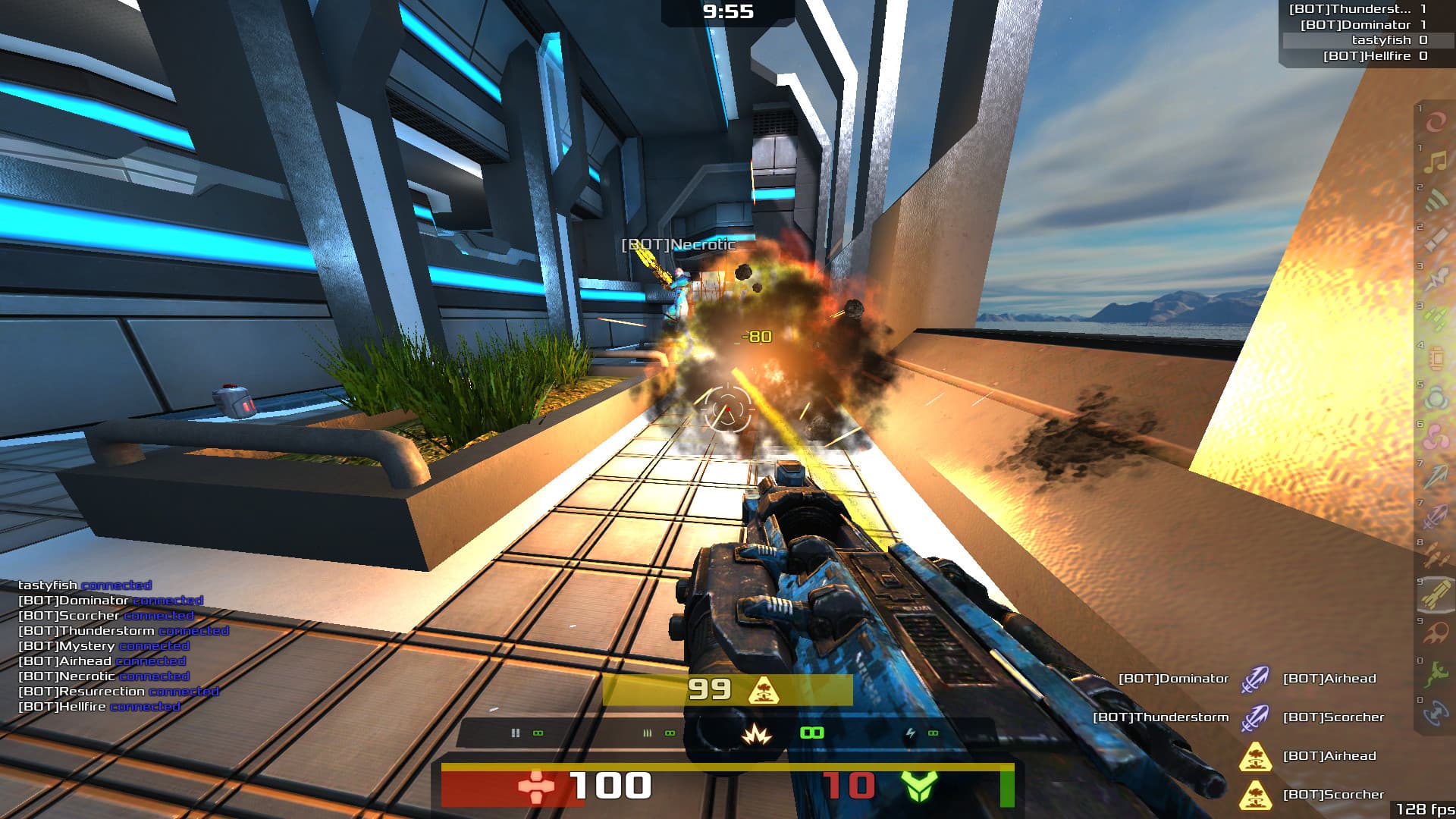
Images are illustrative; they do not represent ROVE facilities or hardware inventory. Xonotic — GPL v2+ · Image source
Back to blog